
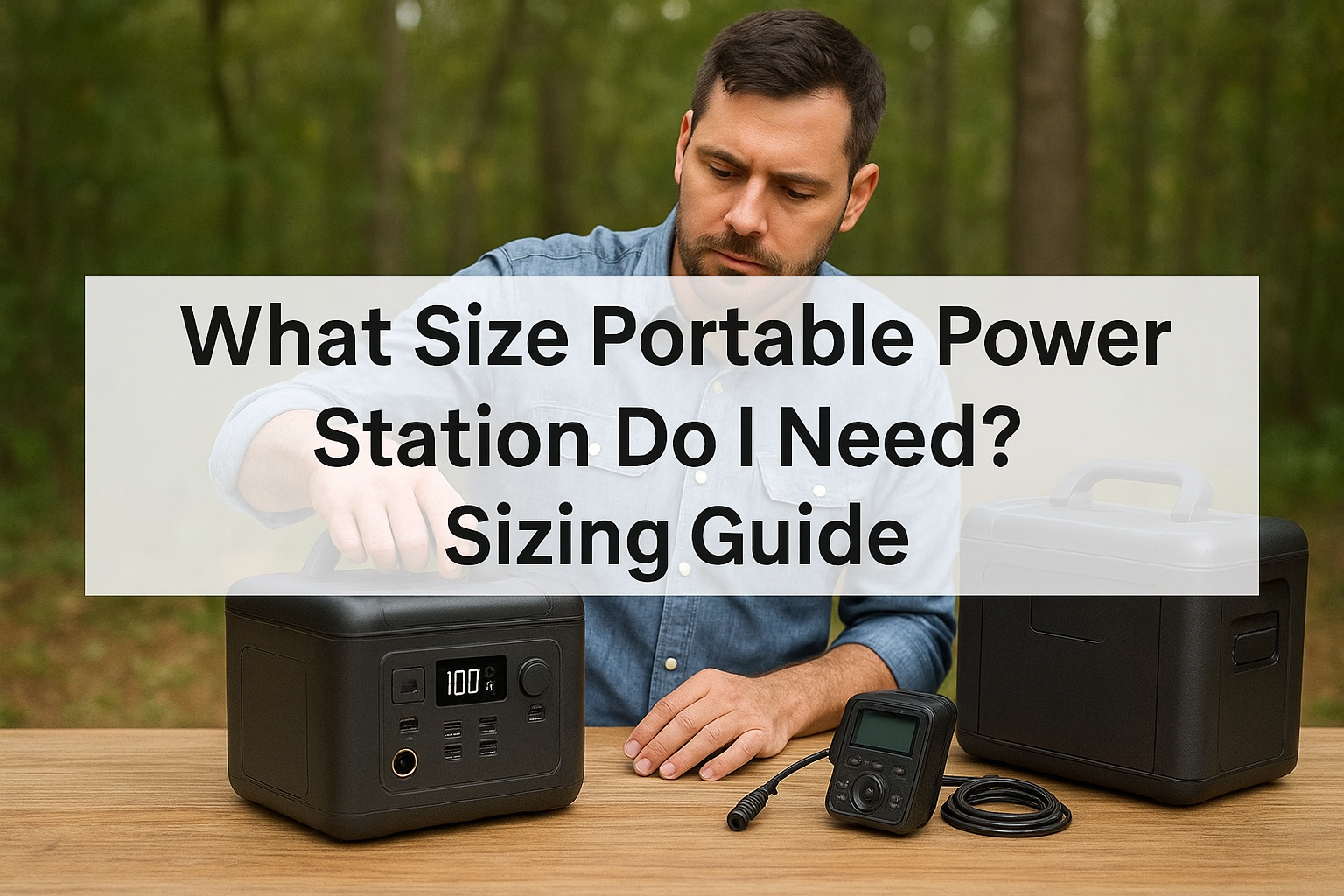
Paranormal investigations don’t happen in convenient locations. Abandoned hospitals, remote cabins, dark basements, none of these places come with working outlets. If you’re running thermal cameras, EVP recorders, full-spectrum cameras, and laptops during a multi-hour session, you need reliable, portable power. That raises the obvious question: what size portable power station do I need?
The answer depends on exactly what you’re powering and for how long. A solo investigator with a couple of small devices has very different needs than a full team running monitors, charging stations, and IR camera arrays. Pick a unit that’s too small, and your gear dies mid-investigation. Go too large, and you’re hauling unnecessary weight into already difficult locations. Getting the size right matters.
At Haunt Gears, we test and review the equipment paranormal investigators actually depend on, and power stations are a critical but often overlooked part of any setup. This guide walks you through how to calculate your total power draw, match it to the right capacity in watt-hours, and choose a portable power station that fits your specific investigation needs without overspending or coming up short.
How portable power stations are rated
Before you can answer "what size portable power station do I need," you need to understand how manufacturers measure and describe these units. Two numbers appear on every spec sheet: watt-hours (Wh) and watts (W). Most buyers focus on one and ignore the other, which leads to purchasing a unit that either runs out too fast or can’t power their devices at all. Both numbers measure entirely different things, and you need to evaluate both before making a decision.

Capacity: watt-hours (Wh)
Watt-hours tell you how much total energy the battery holds. Think of it like the size of a fuel tank. A 500 Wh unit holds 500 watt-hours of stored energy. If you’re drawing 100 watts continuously, that unit lasts roughly five hours before the battery depletes. The higher the Wh rating, the longer your equipment runs without recharging.
The watt-hour rating is the single most important number when you’re planning a multi-hour investigation with multiple devices running at the same time.
Here’s a quick reference for the most common capacity classes:
| Capacity Class | Wh Range | Typical Use Case |
|---|---|---|
| Small | 150-300 Wh | Phones, small recorders, LED lights |
| Mid-range | 300-700 Wh | Cameras, laptops, EVP recorders |
| Large | 700-2000 Wh | Full investigation setups, IR arrays |
| Station-class | 2000+ Wh | Multi-team operations, base camp power |
Output: watts (W) and surge watts
Watts measure how much power the unit can deliver at any single moment. This is the size of the pipe, not the tank. A unit might hold 1000 Wh of capacity but only output 500 W at a time, which means you cannot run a device requiring 600 W even if the battery has plenty of energy stored. Always check the continuous output rating against the combined wattage of everything you plan to run simultaneously.
Surge watts are a separate figure you’ll also see on spec sheets. Many devices pull a spike of power the instant they turn on before dropping to their normal operating draw. Surge watts represent the peak power a unit can handle for a short burst, typically one to three seconds. If your device’s startup surge exceeds the station’s surge watt rating, it won’t start, or it will trigger the overload protection and shut the unit down entirely.
Inverter type and what it means for sensitive gear
Most portable power stations use either a pure sine wave inverter or a modified sine wave inverter. For paranormal investigation equipment, this distinction matters more than most buyers expect. Sensitive electronics like thermal cameras, full-spectrum cameras, and digital audio recorders are designed to run on clean AC power that closely matches what a standard wall outlet delivers. A pure sine wave inverter produces that stable, clean output, which protects your gear and prevents interference in your recordings.
A modified sine wave unit costs less but introduces electrical noise into the power signal. For gear like EVP recorders, that noise can corrupt audio captures and generate false readings. If you’re running any equipment where data accuracy is critical, always choose a unit with a pure sine wave inverter, regardless of the capacity class you settle on.
Step 1. List what you want to power
The most common mistake people make when sizing a portable power station is guessing at what they need rather than calculating it. Before you look at a single spec sheet, sit down and write out every device you plan to run during an investigation. This doesn’t need to be complicated, but it does need to be complete. Missing even one power-hungry device can leave your whole setup dead before the investigation wraps up.
Build your device inventory
Start with a straightforward inventory list. For each device, write down the name, the wattage, and how many hours you expect to run it. Most power ratings are printed directly on the device itself, usually on a sticker near the battery compartment or power input port, or listed in the user manual under "power consumption" or "rated input."
If you can’t find the wattage printed on the device, check the manufacturer’s product page or the documentation that came with the unit.
Here’s a sample inventory template you can copy for your own setup:
| Device | Wattage (W) | Hours in Use |
|---|---|---|
| Full-spectrum camera | 15 W | 4 hrs |
| Laptop | 65 W | 4 hrs |
| EVP recorder | 5 W | 4 hrs |
| Thermal camera | 12 W | 2 hrs |
| LED investigation light | 10 W | 4 hrs |
| Phone charging | 18 W | 1 hr |
Include everything, even small draws
Small devices add up faster than most people expect. A single EVP recorder drawing 5 watts looks insignificant on paper, but when you combine three recorders, two cameras, a laptop, and a set of lights, your total draw climbs quickly into territory that will exhaust an undersized unit well before the session ends. Write down every device you plan to bring, including backup units you might run simultaneously if primary gear fails.
Knowing exactly what you’re powering is the foundation for answering what size portable power station do I need, because every calculation in the steps that follow depends entirely on this list being accurate and complete.
Step 2. Calculate watts and surge watts
Once your device inventory is complete, you move from listing to math. This step tells you how much power you need the station to deliver at any given moment and whether a unit’s specs can actually handle your full load. This is where many buyers discover that a unit they assumed was large enough falls short on output, not because the battery is too small, but because the power delivery rating can’t keep up.
Add up your continuous watt draw
Take every device you plan to run at the same time and add their wattages together. That sum is your continuous watt draw, the number that must fall below your power station’s continuous output rating. Use the inventory you built in Step 1 and run a simple total.
Here’s an example calculation using the sample device list from the previous step:
| Device | Wattage (W) |
|---|---|
| Full-spectrum camera | 15 W |
| Laptop | 65 W |
| EVP recorder | 5 W |
| Thermal camera | 12 W |
| LED investigation light | 10 W |
| Total continuous draw | 107 W |
Your power station’s continuous output rating must exceed this total. Any unit rated at or below 107 W in this example cannot safely run all these devices at once and will trigger overload protection mid-investigation.
Account for surge watts
Surge watts require a separate check beyond your continuous draw total. Identify the single device in your list with the highest startup surge, which is usually your laptop or any device with a motor. Most manufacturers list surge wattage in their product specs, but a reliable estimate is 1.5 to 2 times the device’s rated wattage as a startup spike.
If you can’t find the surge rating for a specific device, treat the continuous wattage multiplied by 2 as your worst-case surge figure.
When working out what size portable power station do I need, your station’s surge rating only needs to exceed the highest single-device startup surge, not the combined surge of everything, since your devices don’t all power on at the exact same instant.
Step 3. Calculate watt-hours for runtime
Knowing your continuous watt draw tells you what a power station can handle at any given moment. Watt-hours tell you how long it keeps running, and that number determines whether your equipment survives a four-hour investigation or dies after two. This step takes your device list and turns it into a concrete capacity target so you know exactly what to look for when comparing units.

Multiply watts by runtime hours
The core formula is simple: multiply each device’s wattage by the number of hours you plan to run it, then add all the results together. This gives you your raw total watt-hour requirement before any adjustments.
Here’s how that calculation looks using the sample device list from the previous steps:
| Device | Wattage (W) | Hours | Wh Required |
|---|---|---|---|
| Full-spectrum camera | 15 W | 4 hrs | 60 Wh |
| Laptop | 65 W | 4 hrs | 260 Wh |
| EVP recorder | 5 W | 4 hrs | 20 Wh |
| Thermal camera | 12 W | 2 hrs | 24 Wh |
| LED investigation light | 10 W | 4 hrs | 40 Wh |
| Phone charging | 18 W | 1 hr | 18 Wh |
| Total | 422 Wh |
Apply an efficiency buffer
A power station never delivers 100% of its rated capacity to your devices. Inverter conversion losses, battery management overhead, and heat all reduce the usable energy you actually receive. The standard efficiency loss for most lithium-based portable power stations sits between 15% and 25%.
To get a reliable capacity target, divide your total watt-hour requirement by 0.85, which accounts for a 15% efficiency loss and builds in a working margin for longer sessions.
For the example above, 422 Wh divided by 0.85 gives you a target of roughly 497 Wh. A 500 Wh unit fits this setup at its minimum threshold, while a 600 Wh unit provides a safer margin for extended sessions or unexpected additions to your gear list. When answering what size portable power station do I need, always round up to the next available capacity class rather than buying exactly at your calculated minimum.
Step 4. Choose the right class and features
With your continuous watt requirement and watt-hour target in hand, you can now match those numbers to a specific capacity class and check the features that actually matter in the field. Picking the right class keeps your setup practical and your pack weight manageable, while the right features ensure the unit performs reliably when you’re in a dark building hours from the nearest outlet.
Match the class to your calculated target
Your watt-hour target from Step 3 tells you exactly which capacity class to shop in. Use the table below as a direct reference to identify where your calculated number lands and what types of investigation setups each class typically supports.
| Capacity Class | Wh Range | Best For |
|---|---|---|
| Small | 150-300 Wh | Solo investigators, 1-2 devices, short sessions |
| Mid-range | 300-700 Wh | Standard setups, 3-6 devices, 4-hour sessions |
| Large | 700-2000 Wh | Full team rigs, 6+ devices, overnight sessions |
| Station-class | 2000+ Wh | Base camp power, multi-team operations |
Always buy one class above your minimum calculation rather than shopping at the exact edge of your target. Investigations run longer than planned, and gear gets added at the last minute more often than most investigators expect.
When answering what size portable power station do I need, your calculated minimum is a floor, not a target – always leave capacity headroom.
Features that matter for field use
Beyond capacity and output, specific features separate units that perform in investigation conditions from units that just look good on paper. Check for these before purchasing:
- Pure sine wave inverter: Required for cameras, recorders, and sensitive electronics
- Pass-through charging: Lets you charge the station while running gear during base camp setups
- AC outlet count: Confirm enough outputs for your full device list without adapters
- Readable display: A clear watt and percentage readout lets you monitor draw in low-light conditions
- Weight and carry format: Units above 700 Wh get heavy; verify the unit has a handle or strap
Prioritize the inverter type and outlet count first, then evaluate weight relative to how far you typically carry your gear into a location.

Conclusion
Answering what size portable power station do I need comes down to four concrete steps: list your devices, total your watts, calculate your watt-hours with an efficiency buffer, and match that number to the right capacity class. Skip any step and you risk either hauling a unit too heavy for the location or losing power before the investigation ends.
Every calculation in this guide builds on the one before it, so work through them in order and write the numbers down. Your continuous watt draw protects against overload, and your adjusted watt-hour target protects against running out of energy mid-session. Both numbers matter equally.
If you’re also looking to upgrade the rest of your investigation gear, browse the full range at Haunt Gears paranormal investigation equipment shop. The right power station keeps everything running, and the right gear gives you something worth running in the first place.
Leave a Reply