You’ve probably seen infrared footage, grainy green images of figures moving through darkness, or bright heat signatures against a cold background. But what is an infrared camera, exactly, and how does it capture what the human eye cannot? Whether you’re monitoring a security perimeter, inspecting electrical systems for faults, or investigating a reportedly haunted location, understanding this technology helps you choose the right tool for the job.
At Haunt Gears, we equip paranormal investigators with professional-grade IR cameras and other detection devices. Infrared technology is a cornerstone of ghost hunting because it reveals activity in complete darkness without disturbing the environment with visible light. But IR cameras serve far more purposes than documenting potential paranormal evidence.
This article breaks down how infrared cameras work, explores their primary applications across industries, and clarifies the often-confused distinction between infrared and thermal imaging. By the end, you’ll know exactly which type of camera fits your needs.
Why infrared cameras matter
Infrared cameras detect radiation in wavelengths that your eyes cannot perceive, extending your sensory capabilities beyond the visible spectrum. While you see only a narrow band of electromagnetic radiation (roughly 400 to 700 nanometers), IR cameras capture wavelengths from 700 nanometers to 1 millimeter. This expanded range reveals activity, temperature differences, and objects that remain completely invisible under normal conditions. For investigators, security professionals, and maintenance technicians, this means you can document evidence, identify problems, and monitor areas without relying on visible light sources that might compromise your position or alter the environment you’re observing.
Beyond human vision
Understanding what is an infrared camera starts with recognizing that these devices function as extensions of human perception. Your body emits infrared radiation as heat, and so does every other warm object in your environment. An IR camera converts this radiation into visual information you can analyze, whether you’re searching for energy leaks in a building envelope, tracking wildlife at night, or documenting temperature anomalies during a paranormal investigation. This capability transforms invisible phenomena into actionable data.
Infrared imaging reveals what remains hidden in darkness, giving you a complete picture of your surroundings regardless of lighting conditions.
The technology matters because it operates independently of ambient light. Traditional cameras need photons in the visible spectrum to function, but IR cameras generate images based on heat signatures or reflected infrared light. You can work in complete darkness without flashlights or floodlights that announce your presence, disturb wildlife, or contaminate an investigation scene with artificial illumination.
Real-world impact across industries
Security operations rely on infrared cameras to monitor perimeters after sunset without alerting intruders to surveillance positions. Maintenance teams use them to spot overheating electrical components before failures occur, preventing costly downtime and fire hazards. Medical professionals employ IR imaging to detect inflammation and circulation problems beneath the skin’s surface. Even firefighters depend on thermal cameras to locate victims through smoke and identify hot spots that could reignite.
For paranormal investigators specifically, IR cameras document environmental changes that correlate with reported activity. You capture footage in pitch-black conditions, record temperature fluctuations that may indicate energy manifestations, and maintain a non-invasive observation approach that preserves the integrity of your investigation.
How infrared cameras work
Every object above absolute zero emits infrared radiation proportional to its temperature. An infrared camera uses specialized sensors to detect this radiation, then converts the invisible energy into electrical signals your monitor can display as a visible image. The process happens continuously, generating real-time video or still frames that reveal heat patterns, objects, and movement in total darkness. Understanding what is an infrared camera requires grasping this fundamental principle: the device translates electromagnetic waves you cannot see into visual data you can interpret.

Detection and conversion
The camera’s lens focuses incoming infrared radiation onto a detector array, typically made from materials like indium antimonide or vanadium oxide. These sensors respond to specific IR wavelengths by generating electrical charges proportional to the radiation intensity they receive. Each pixel in the array captures information from a tiny portion of your field of view, creating a detailed map of infrared energy across the entire scene.
Infrared sensors translate invisible heat signatures into electrical signals, transforming thermal information into visual data you can analyze frame by frame.
Your camera’s processor amplifies these signals and applies calibration algorithms that account for the sensor’s operating temperature and environmental conditions. This step ensures the data accurately represents the radiation levels the camera detected rather than introducing false readings from the device’s own heat output.
Creating the visible image
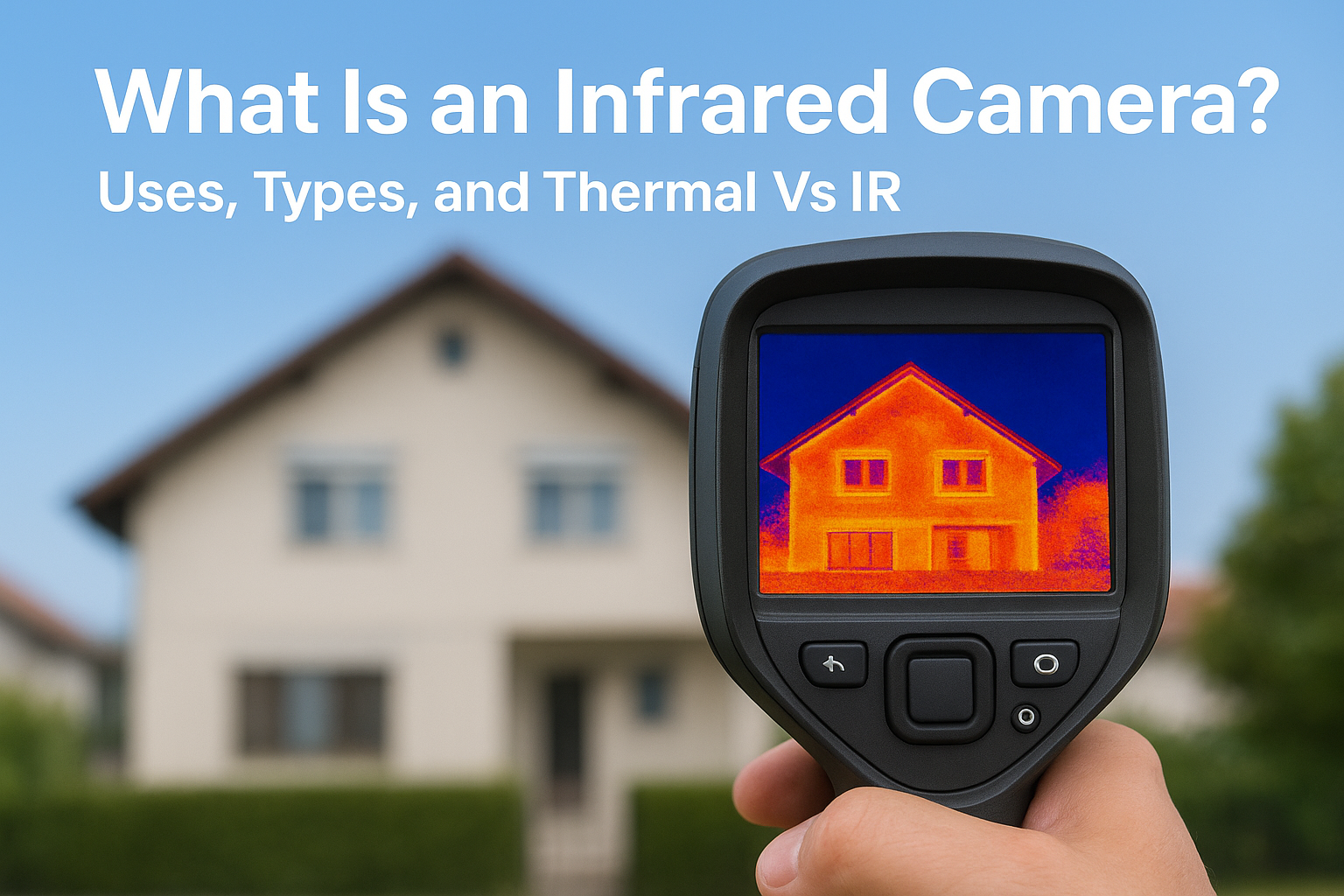
Processing circuits assign color values or grayscale intensities to the electrical signals based on their strength. Warmer objects producing stronger IR emissions appear as brighter colors (often white, red, or yellow in thermal palettes), while cooler areas show as darker tones. The display then presents this colorized or monochromatic representation as a live feed you can record, analyze, or transmit to remote monitors for real-time surveillance and investigation work.
Types of infrared cameras and sensors
Infrared cameras fall into distinct categories based on the wavelengths they detect and the methods they use to capture images. Your choice depends on whether you need to see reflected infrared light, measure temperature differences, or both. Each type serves specific applications that determine which technology delivers the results you require for security monitoring, equipment inspection, or paranormal investigation work.
Active infrared systems
Active IR cameras emit their own infrared illumination to light up your target area, then capture the reflected radiation with a standard image sensor. These devices work like flashlights operating in a spectrum your eyes cannot detect. You see subjects in complete darkness without visible light that would compromise stealth operations or disturb investigation conditions. Most night vision security cameras and entry-level paranormal equipment use this active approach because the technology costs less than thermal alternatives.
Passive thermal imaging
Passive systems detect naturally emitted infrared radiation without projecting any illumination. These cameras measure heat signatures directly, creating images based on temperature variations across your scene. When someone asks what is an infrared camera in professional contexts, they typically mean this thermal imaging technology. The sensors use cooled or uncooled detectors depending on sensitivity requirements. Cooled sensors deliver superior image quality for long-range applications, while uncooled microbolometer arrays offer portable solutions at lower price points.
Thermal cameras reveal temperature patterns that remain completely invisible to active infrared systems, making them essential for detecting heat anomalies and energy signatures.
Both categories operate across different infrared wavelength bands: near-infrared (0.7 to 1.4 micrometers), mid-infrared (1.4 to 3 micrometers), and far-infrared (3 to 14 micrometers). Your application determines which band and camera type you need.
Common uses for infrared cameras
Infrared cameras serve diverse professional applications that span security, maintenance, medical diagnostics, and specialized investigation work. Understanding what is an infrared camera means recognizing how multiple industries depend on this technology to solve problems that visible light cannot address. You’ll find these devices everywhere from building rooftops to hospital examination rooms, each application taking advantage of the camera’s ability to detect heat patterns, movement in darkness, or structural defects hidden beneath surfaces.
Security and surveillance
Security professionals use IR cameras to monitor properties 24/7 without installing expensive lighting infrastructure. You gain complete visibility across parking lots, warehouses, and perimeter fences after sunset, capturing clear footage of intruders who believe darkness provides cover. Law enforcement agencies deploy these systems for tactical operations and suspect tracking, while border patrol units scan vast wilderness areas for unauthorized crossings that would remain invisible to standard cameras.
Industrial and building inspection
Maintenance teams rely on infrared imaging to identify electrical faults before failures occur. You spot overheating transformers, loose connections, and circuit breaker problems by scanning equipment for abnormal heat signatures. Building inspectors use thermal cameras to detect insulation gaps, moisture intrusion, and HVAC inefficiencies that waste energy and money. The technology reveals problems inside walls and ceilings without destructive investigation methods.
Infrared cameras transform routine inspections into comprehensive diagnostic procedures, catching problems that visual examination would miss entirely.
Specialized applications
Medical professionals employ IR imaging for inflammation detection and circulation assessment. Firefighters navigate smoke-filled structures using thermal cameras that reveal victims and hotspots through zero-visibility conditions. Paranormal investigators document temperature anomalies and activity in complete darkness, maintaining non-invasive observation protocols that preserve investigation integrity.
Infrared vs thermal vs night vision
People often confuse these three technologies because they all help you see in darkness, but they operate through fundamentally different mechanisms. Understanding what is an infrared camera and how it differs from thermal or night vision devices helps you select the right equipment for your specific application. Each technology captures different types of information, costs different amounts, and delivers distinct advantages depending on whether you need to detect heat signatures, amplify existing light, or illuminate scenes with invisible radiation.

Key differences explained
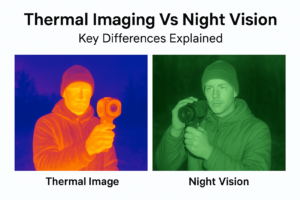
Active infrared cameras project IR illumination outward and capture the reflected light, creating images similar to what you’d see with a flashlight that operates outside the visible spectrum. Night vision amplifies ambient light from stars, moon, or distant sources using photomultiplier tubes or digital sensors, requiring at least minimal existing illumination to function. Thermal cameras detect naturally emitted heat radiation without any external light source, measuring temperature differences across your field of view rather than reflected photons.
Thermal imaging reveals heat patterns that active IR and night vision cannot detect, making it the only technology that works in absolute darkness with zero ambient light.
The technologies use different wavelength ranges as well. Active IR operates in near-infrared (0.7 to 1.4 micrometers), night vision works across visible and near-IR bands, while thermal cameras capture mid to far-infrared (3 to 14 micrometers) where heat signatures emit strongest.
When to choose each technology
You need thermal imaging when detecting temperature anomalies matters more than identifying fine details, such as during equipment inspections or paranormal investigations tracking cold spots. Active IR suits surveillance applications requiring subject identification at specific distances with your own controlled illumination. Night vision excels for navigation and observation in environments with some ambient light where you need to preserve natural perception while extending your visual range beyond normal human capabilities.

Quick wrap-up
You now understand what is an infrared camera and how this technology extends your perception beyond visible light to capture heat signatures and activity in complete darkness. The equipment serves critical applications across security monitoring, equipment inspection, medical diagnostics, and paranormal investigation work, with each field relying on infrared radiation to reveal information your eyes cannot detect through standard observation methods.
Choosing between active IR, thermal imaging, and night vision depends on your specific operational requirements and environmental conditions. Active systems work best when you need subject identification with controlled illumination, thermal cameras excel at detecting temperature anomalies and energy patterns, and night vision amplifies existing ambient light for navigation and observation in low-light environments.
If you’re investigating paranormal activity or need professional-grade detection equipment for field research, explore our infrared camera selection at Haunt Gears. We provide expert reviews, comprehensive starter kits, and dedicated technical support to help you document evidence effectively while maintaining investigation integrity.
Discover more from Haunt Gears
Subscribe to get the latest posts sent to your email.