
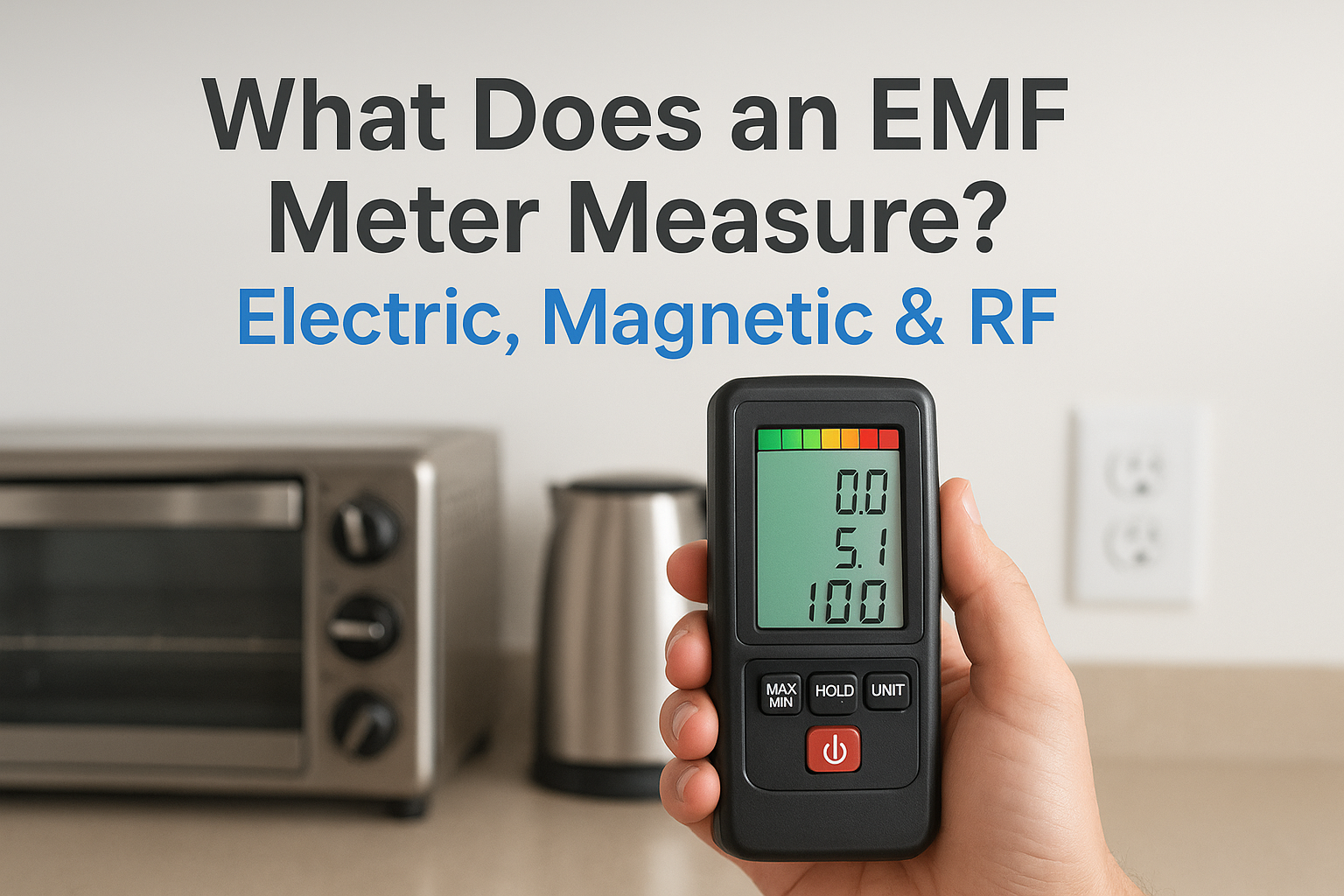
EMF meters rank among the most essential tools in any paranormal investigator’s kit, but their usefulness extends far beyond ghost hunting. Understanding what does an EMF meter measure helps you interpret readings correctly, whether you’re scanning a reportedly haunted location or checking for electromagnetic interference in your home.
At its core, an EMF meter detects invisible electromagnetic radiation produced by electrical systems, wireless devices, and natural sources. These devices pick up electric fields, magnetic fields, and radio frequencies (RF), each with distinct characteristics and common triggers. A flickering reading might indicate a faulty wire, a nearby cell phone, or something you can’t immediately explain. Knowing the difference matters when you’re documenting potential evidence or troubleshooting technical issues.
This guide breaks down exactly what EMF meters detect, the household and environmental sources that cause spikes, and how to read your measurements with confidence. At Haunt Gears, we’ve tested dozens of meters across real investigation scenarios, and we’ll share what actually affects your readings in the field.
What an EMF meter measures and what it misses
Most EMF meters on the market detect three types of electromagnetic radiation: electric fields, magnetic fields, and radio frequencies (RF). Your device measures these invisible waves in different units and frequency ranges, depending on its design and sensor array. Budget models often focus on magnetic fields alone, while advanced meters give you simultaneous readings across all three categories. Understanding what does an emf meter measure helps you identify the actual source behind an unexpected spike during an investigation.
What EMF meters detect
Standard EMF meters capture low-frequency AC magnetic fields from power lines, wiring, and electrical appliances, typically in the 50-60 Hz range. They also pick up electric fields generated by live voltage in outlets, cords, and circuit breakers, even when no current flows. RF-capable meters extend your detection range to wireless signals from cell towers, WiFi routers, Bluetooth devices, and microwave ovens operating at much higher frequencies.
Different sensors respond to different radiation types, so a single meter rarely covers the complete electromagnetic spectrum.
What they don’t measure
Your EMF meter won’t detect ionizing radiation like X-rays, gamma rays, or radioactive particles; you need a Geiger counter for that. Most consumer models also miss DC magnetic fields from permanent magnets or the Earth’s natural magnetism, and they can’t measure light waves in the infrared or ultraviolet spectrum. Static electricity won’t register on standard meters either. These gaps matter when you’re trying to rule out false positives or investigate claims that don’t align with the radiation your meter actually measures.
Electric fields vs magnetic fields vs RF
Understanding the three main types of electromagnetic radiation your meter detects prevents confusion when you’re analyzing readings in the field. Each type behaves differently, originates from distinct sources, and requires specific interpretation during an investigation.

Electric fields
Electric fields form around live voltage in wiring, outlets, and electrical equipment, even when nothing is drawing power. Your meter registers these fields in volts per meter (V/m), and the strength drops rapidly as you move away from the source. Common triggers include power cords behind walls, extension cables under carpets, and electrical panels. Shielding like grounded metal enclosures can block electric fields completely, which helps you isolate them during testing.
Magnetic fields
Magnetic fields appear when current flows through conductors, appliances, or power lines. These fields penetrate most materials, making them harder to shield and easier to detect through walls and floors. Your meter measures them in milligauss (mG) or microtesla (µT), with readings spiking near transformers, motors, and high-current devices.
Power transmission lines generate strong magnetic fields that extend dozens of feet from the source.
Radio frequencies (RF)
RF radiation covers the wireless spectrum from a few kilohertz to several gigahertz, including cell signals, WiFi, Bluetooth, and microwave ovens. These high-frequency waves travel through air and walls, creating ambient background levels nearly everywhere. Your RF meter displays readings in milliwatts per square meter (mW/m²) or voltage per meter, depending on the model.
Units, ranges, and what the numbers mean
Different EMF meters display readings in various units depending on what does an emf meter measure and which radiation type the sensor detects. You’ll see magnetic fields measured in milligauss (mG) in the United States or microtesla (µT) in most other countries, with 1 µT equal to 10 mG. Your electric field readings appear as volts per meter (V/m), while RF meters show milliwatts per square meter (mW/m²) or sometimes volts per meter for wireless frequencies.
Understanding magnetic field scales
Most residential environments show ambient magnetic field readings between 0.5 and 3 mG under normal conditions. Background levels spike near appliances and wiring, with readings above 10 mG typically indicating proximity to motors, transformers, or high-current circuits. Health agencies suggest chronic exposure limits around 2 to 4 mG for extended periods, though these guidelines vary by organization.
Professional investigators often flag readings above 5 mG during baseline scans to identify equipment interference.
Electric field and RF thresholds
Electric field measurements range from a few V/m in low-exposure areas to hundreds near power lines or electrical panels. RF readings vary widely based on your distance from wireless sources, with typical indoor levels between 0.01 and 1 mW/m² and outdoor cellular zones reaching higher concentrations near towers.
How to use an EMF meter without bad readings
Proper technique separates accurate data from false positives when you’re scanning any environment. Your readings mean nothing if you contaminate them with operator error or environmental interference, so learning what does an emf meter measure includes understanding how to avoid common mistakes that skew results.

Calibrate and set your baseline
Start every investigation by powering on your meter in a neutral location at least 10 feet from known electrical sources. Record these baseline readings before you begin scanning, because they establish your reference point for identifying genuine anomalies. Most devices need 30 to 60 seconds to stabilize after startup, so give your meter time to settle before trusting the numbers.
Your baseline tells you what normal looks like, making unusual spikes easier to identify during active scanning.
Keep distance from metal and electronics
Hold your meter at least two feet away from your body and any metal objects like belt buckles, keys, or jewelry, which can distort electromagnetic fields. Cell phones in your pocket create constant RF interference, so put them in airplane mode or leave them behind during critical measurements. You should also avoid scanning while standing directly on metal grates, rebar-reinforced concrete, or near electrical conduit buried in walls.
Common sources that spike EMF readings at home
Understanding household EMF sources helps you distinguish between normal electromagnetic activity and readings worth investigating further. Your home contains dozens of devices that generate detectable fields, and knowing what does an emf meter measure in typical domestic settings prevents you from flagging ordinary appliances as paranormal anomalies.
Appliances and motors
Refrigerators, microwaves, and dishwashers produce strong magnetic fields when their motors and compressors cycle on. Your meter will spike near these devices, often registering 5 to 20 mG within a few feet, with readings dropping sharply as you step back.
Microwave ovens also emit RF radiation during operation, creating wireless interference that RF-capable meters detect easily. Washing machines, dryers, and HVAC systems generate similar spikes when running.
Kitchen appliances account for the majority of false positives during residential investigations.
Electrical infrastructure and wireless devices
Hidden wiring behind walls generates electric fields from live voltage and magnetic fields when current flows to active circuits. Breaker boxes and junction boxes create concentrated electromagnetic zones, sometimes producing readings above 10 mG within arm’s reach.
Televisions, computer monitors, and routers emit continuous RF signals alongside magnetic fields from internal components. Your meter registers WiFi and Bluetooth transmissions as ambient RF radiation throughout rooms with active wireless devices.

Next steps
Now that you understand what does an emf meter measure and how to interpret your readings accurately, you can start documenting electromagnetic activity with real confidence in any environment. Begin by establishing baseline measurements in every room you plan to investigate, carefully noting any appliances, wiring, or wireless devices that create consistent readings. Record these normal levels in your field notes so you can identify genuine anomalies when they appear during your active investigation periods.
Your next move depends entirely on your specific goals and investigation focus. If you’re troubleshooting household interference or addressing potential health concerns, map out high-EMF zones and consider relocating electronics or rerouting problem wiring. For paranormal investigation work, pair your EMF readings with other complementary data like temperature fluctuations and audio recordings to build stronger, more credible evidence packages.
Ready to upgrade your detection capabilities? Browse our curated selection of professional EMF meters and investigation tools designed specifically for accurate fieldwork in any environment
- Accessories4 products
- Advanced EMF Meter11 products
- Infrared Night Vision Camera4 products
- Multi-Function Paranormal Research Tools2 products
- Paranormal Communication Devices14 products
- Paranormal Investigation Guidebook7 products
- Paranormal Research Starter Kits7 products
- Thermal Camera8 products
- Walkie Talkies1 product
Leave a Reply