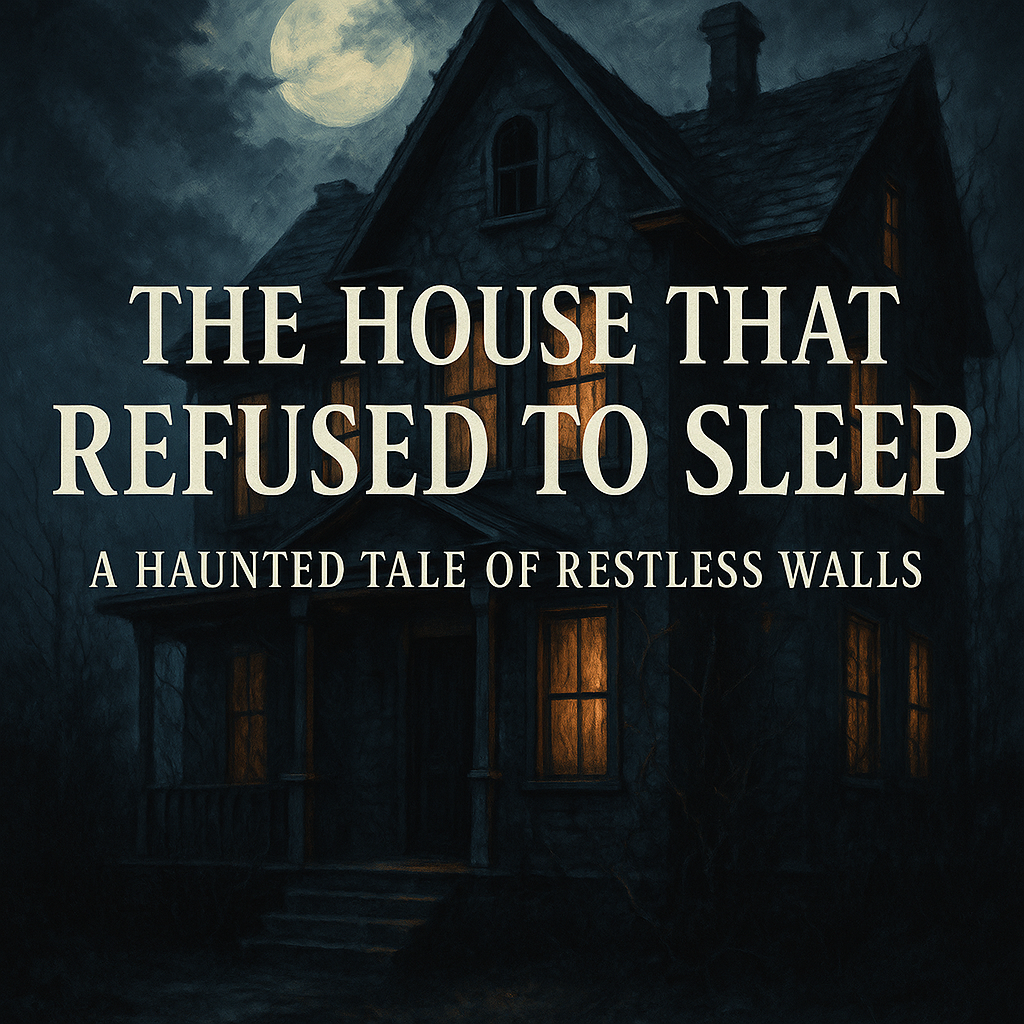
The House That Refused to Sleep

In the middle of a quiet street stands a house that never quite settles. Its curtains flutter at midnight without wind. The hallway clock ticks in irregular patterns. Lights blink on and off like eyelids fighting rest. Locals joke, whisper, and sometimes avoid the place altogether. They call it “The House That Refused to Sleep,” and the name fits better than anyone imagined.
This is not a single story of horror. It is a layered portrait of memory, restlessness, and the ways a dwelling can hold on to everything it has ever witnessed.
The Nightly Rituals
When the sun goes down, the house wakes in ways that make you listen.
- Lamps that should be off glow faintly, leaking warmth into empty rooms.
- Stairs creak in a cadence that sounds like someone pacing, then pausing at each landing.
- The radio plays songs from decades past, soft and distorted, as if muffled by time.
- Doors close without draft; keys rattle in locks no longer used.
These rituals are oddly domestic. There’s no malevolent force choreographing them. Instead, it feels like a place practicing the motions of life while that life is absent—rehearsing laughter, footsteps, and the hush of bedtime.
Sounds and Sights
You will notice small, human details. A teacup set down on the kitchen counter, ring of condensation on the table where no one drinks anymore. A child’s drawing pinned to the refrigerator with the name of a school long closed. The curtains, though clean, seem to have the shape of a shoulder folded against them.
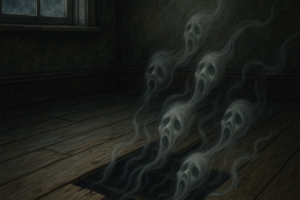
At times, guests report seeing faint silhouettes: a figure at the window watching the road, a pair of hands smoothing a quilt, a man standing in the doorway with a coat slung over his arm. They vanish when you blink. The occurrence of these apparitions is less frightening than melancholic—like interruptions by memories that cannot accept their own ending.
The People Who Stay
Not all who live near the house are spooked away. Some are drawn in like moths to a porch light. They are caretakers, historians, or simply those who cannot bear the idea of erasure.
- The caretaker, an older woman, sweeps every morning and talks to the rooms as if they might answer.
- A local teacher brings students to catalog the house’s objects, turning its restlessness into lessons about continuity.
- Neighbors leave meals on the step when they know someone used to live there; no one takes the food, but the plate’s presence comforts the rhythm of the place.
Communities coalesce around what defies closure. They listen to its nighttime noises and tell each other stories that soften the edges of fear.
What the House Asks For
If a house could speak, what would it want? The house that refused to sleep seems to ask for recognition more than anything else. It refuses to be forgotten.
- It wants its stories told aloud: the births, the fights, the kitchens where secrets were shared.
- It wants small attentions: a window cleaned, a garden weeded, a photograph hung straight.
- It wants witnesses who will not smooth away its cracks.
Acknowledgement is a form of rest. The more people remember and maintain, the less urgent its nocturnes become. Silence, by contrast, feeds the compulsion to rehearse the life it once held.
Why It Matters
This house is a metaphor as well as a mystery. In a culture that prizes progress and newness, there are plenty of homes and histories left unattended. The house that refuses to sleep reminds us of the costs of forgetting.
It teaches us:
- Memory needs tending. Left unchecked, it grows loud in the night.
- Grief has a shape—sometimes a whole building—and it asks for rites, not erasure.
- Community heals place. Collective remembering steadies the restless.
The house is a mirror: when the world moves on without looking back, echoes can become chorus.
How to Help the House Sleep
If you encounter a place like this, help is simple and human.
- Visit. Sit with the silence and bring a small offering—a book, a mended curtain, a fresh candle.
- Listen. Record stories from older neighbors. Share them with others.
- Keep presence. Regular attention is a lullaby stronger than any charm.
A house does not need exorcism; it needs handrails for its memories and a few steady voices to tell it that its history matters.
Closing Thought
The House That Refused to Sleep is a stubborn guardian of what once was. It resists being smoothed into a vacancy. And perhaps that refusal is a kindness: a reminder that some things are worth staying awake for, if only to remember them gently until they can rest.
Discover more from Haunt Gears
Subscribe to get the latest posts sent to your email.