
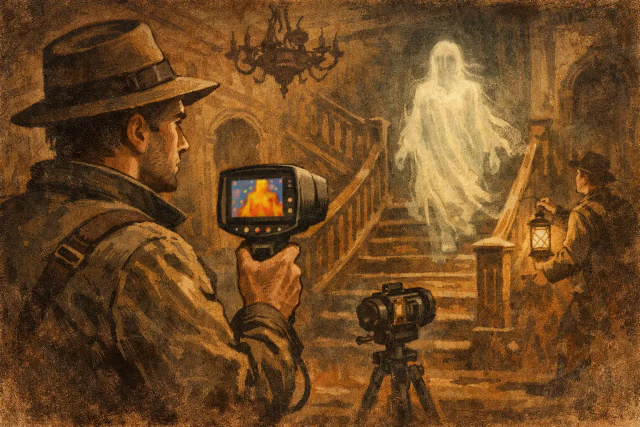
A cold spot means a lot more when you can document it.
That is the real appeal of using a thermal camera on an investigation. It is not about turning every warm doorway into a haunting. It is about seeing temperature differences your eyes cannot catch, then pairing that visual evidence with timing, location notes, EVP sessions, EMF readings, and video. If you want cleaner investigations and fewer guesses, a thermal camera earns its place fast.
Why use a thermal camera for paranormal investigation?
Paranormal teams talk about cold spots all the time, but human perception is unreliable in dark buildings, drafty hallways, and outdoor night hunts. A thermal camera gives you a visual map of heat signatures across a room. That can help you spot unusual temperature changes, but just as importantly, it can help you rule out normal causes like vents, poor insulation, body heat on furniture, or a recently opened door.
That second part matters. Good evidence work is not just about finding something strange. It is about eliminating obvious explanations first.
A thermal camera also works differently from infrared night vision gear. Night vision helps you see in darkness by using available light or infrared illumination. Thermal imaging reads heat differences. In practice, that means a thermal unit can reveal a warm handprint on a wall, a cooler patch near a window, or a moving heat source in complete darkness without relying on visible detail. For paranormal investigation, that makes it a strong companion tool, not a replacement for IR cameras.
What actually matters in a thermal camera
If you are shopping for a thermal camera for paranormal investigation, the spec sheet can get noisy fast. The models that work best are not always the ones with the flashiest marketing. They are the ones that fit how you investigate.
Thermal resolution matters more than big claims
Resolution is the first thing to take seriously. A low-resolution thermal image can still show broad hot and cold areas, but it may blur fine detail so much that you cannot tell what you are really looking at. For basic ghost hunting, entry-level resolution may be enough to identify room-level temperature changes. If you want cleaner footage for review, social content, or evidence logging, stepping up in resolution makes a noticeable difference.
This is one of the biggest trade-offs in the category. Better resolution usually means a much higher price. Beginners do not always need the top tier. But if you investigate large properties, film regularly, or want footage that stands up better under scrutiny, it is worth paying for clarity.
Temperature sensitivity is underrated
Some investigators focus only on image sharpness, but temperature sensitivity can be just as useful. A camera that detects smaller heat differences may show subtle shifts that a cheaper unit smooths over. That does not mean every faint change is paranormal. It means you get a more precise picture of what the environment is doing.
For indoor investigations, especially in older homes where drafts and insulation issues are common, sensitivity helps you separate meaningful changes from messy background conditions.
Refresh rate affects live scanning
If you sweep rooms slowly, a lower refresh rate can be workable. If you track movement, scan hallways, or record active walk-throughs, a higher refresh rate feels much more natural. Choppy thermal video can make it harder to follow heat changes in real time.
Content creators and team leads who narrate live findings usually notice this right away. It is less about ghost-hunting hype and more about usability.
Recording and storage save you headaches later
Some thermal cameras are great for live viewing but weak when it comes to saving usable footage or still images. That can be frustrating if you capture something interesting and later realize the file quality is poor or the export process is awkward.
For paranormal work, built-in image capture, video recording, and easy file transfer are practical features, not luxuries. If your workflow includes reviewing evidence after the hunt, sharing clips with your team, or building cases for recurring activity, recording support matters a lot.
Handheld, phone-attached, or hybrid?
This is where budget and investigation style come together.
A dedicated handheld thermal camera is usually the most reliable choice for serious field use. It is purpose-built, often easier to operate in the dark, and less dependent on your phone battery or app stability. Many investigators prefer handheld units because they feel more like a core tool and less like an accessory.
Phone-attached thermal cameras are appealing because they cost less and can deliver surprisingly good results for the money. They are a smart entry point if you are building your kit and do not want to overspend early. The downside is that they rely on phone compatibility, app performance, and sometimes awkward handling during active investigations.
Hybrid approaches can work too. Some teams use a phone-based thermal unit for quick sweeps and a dedicated IR or full-spectrum camera for continuous filming. That setup is not glamorous, but it is efficient.
What a thermal camera can and cannot prove
This is where investigators either build trust or lose it.
A thermal camera can document unexplained temperature patterns. It can show where a change happened, how long it lasted, and whether it moved. It can help you validate witness claims about a cold hallway or a sudden heat signature in a room. It can also reveal very normal explanations that save you from mislabeling bad data as evidence.
What it cannot do is prove a spirit caused the change.
That does not make the tool less valuable. It makes it more useful when you treat it as part of a larger evidence chain. If a thermal anomaly appears at the same time as an unexplained audio event, a relevant REM pod trigger, and consistent witness experience, the moment becomes more compelling. On its own, thermal footage is usually a lead, not a verdict.
That investigator-first mindset is exactly why thermal gear belongs in serious kits. It sharpens your documentation and keeps your claims disciplined.
Best use cases for a thermal camera during an investigation
The strongest thermal results usually come from structured use, not random scanning.
Start with baseline sweeps. Before any session begins, scan each room and note vents, windows, electronics, appliances, reflective surfaces, and known cold zones. This gives you a reference point. Later, if you notice a change, you are comparing it against real conditions rather than memory.
Thermal cameras are especially useful during stationary sessions in reportedly active rooms. If the team is quiet and environmental conditions are relatively stable, sudden localized changes are easier to evaluate. Long corridors, stairwells, and large open rooms can also benefit because heat patterns are hard to judge by feel alone.
For outdoor investigations, thermal can help you quickly identify wildlife, distant people, and other natural heat sources that might otherwise be mistaken for paranormal movement. That alone can save a lot of bad calls.
Common mistakes buyers make
The biggest mistake is buying based on ghost-hunting marketing instead of practical specs. A thermal camera is not better because the box uses spooky language. It is better if it gives you readable imaging, dependable recording, and enough sensitivity for the environments you investigate.
Another mistake is expecting thermal to replace every other visual tool. It will not. You still want night vision for context, standard video for documentation, and audio tools for correlation. Thermal is one of the best specialty tools in the kit, but it works best alongside other gear.
The last common mistake is ignoring environmental literacy. If you do not understand how HVAC vents, reflective materials, weather changes, and human heat contamination affect readings, even an excellent camera can lead you to bad conclusions. Gear helps, but method matters more.
How to choose the right thermal camera for your budget
If you are a beginner, focus on dependable entry-level performance and easy recording. You do not need elite specs to start documenting temperature anomalies more seriously. A solid, lower-cost unit can teach you how thermal behavior looks in real locations without blowing your budget.
If you are a frequent investigator or content creator, move up to better resolution and smoother live viewing. Your footage will be easier to review, easier to share, and more useful when comparing moments across multiple devices.
If you are outfitting a team, think less about one premium device and more about workflow. One strong thermal camera in the hands of a disciplined operator may serve you better than multiple cheap units producing inconsistent results.
At HauntGears, that is the lens worth using for any gear decision – not what sounds dramatic, but what improves your evidence process and gives you confidence in the field.
A thermal camera will not hand you proof of the unknown. What it can do is make your investigation sharper, calmer, and harder to fool. That is often where the best evidence starts.
Best Thermal Camera for Paranormal Investigations 👻
Detect cold spots, see heat signatures in the dark, and capture unexplained activity.
Check Price on AmazonAs an Amazon Associate, we may earn from qualifying purchases.
Discover more from Haunt Gears
Subscribe to get the latest posts sent to your email.
Leave a Reply
Your email is safe with us.