

This guide explains EMF sensing approaches and buying features. For named products rather than meter types, use the EMF model comparison. Check which fields and frequencies a particular model measures in its current manual.
Paranormal Investigation Gear Guide
Best EMF Reader for Ghost Hunting in 2026: Buyer’s Guide
The best EMF reader for ghost hunting is not necessarily the model with the most lights or the highest price. It is the meter that responds consistently, matches the frequencies you want to measure, and helps you separate ordinary electrical interference from an event worth documenting. This guide explains what to buy, what the readings mean, and how to use an EMF meter responsibly during an investigation.
What Is the Best EMF Reader for Ghost Hunting?
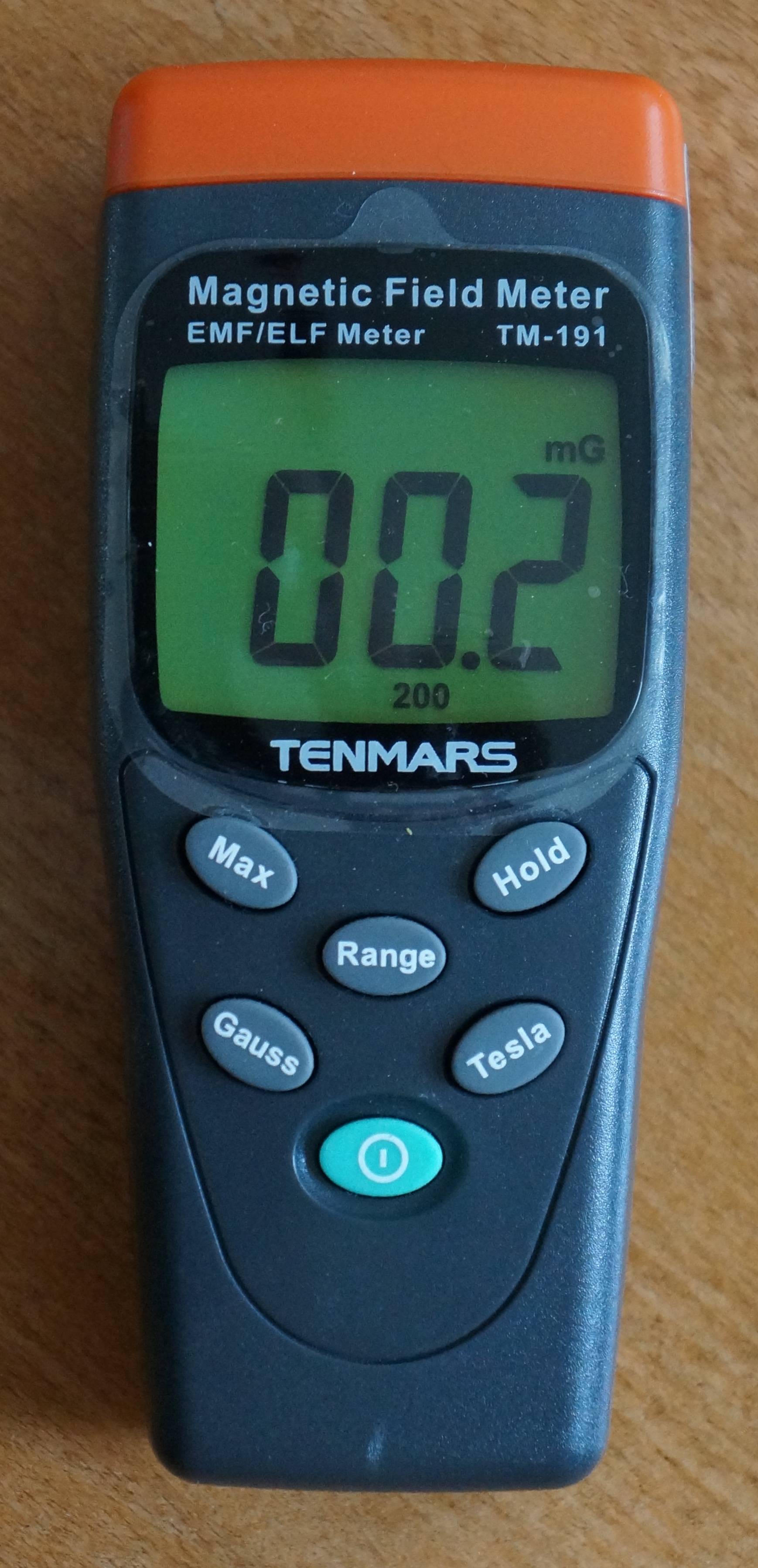
For most investigators, the best all-around choice is a tri-axis magnetic-field meter with a fast refresh rate, a clear backlit display, peak-hold, and optional data logging. A tri-axis sensor measures three directions at once, so the result depends less on how you hold the device. Beginners who want simple visual feedback may prefer an LED-style meter, while technical investigators may benefit from a meter that separates low-frequency magnetic fields from radio-frequency signals.
| Investigator | Best meter type | Why it fits | Main limitation |
|---|---|---|---|
| Beginner | Simple LED EMF detector | Fast to learn and easy to see in a dark room | Often provides less precise numerical data |
| Most investigators | Tri-axis digital meter | Measures in three directions and supports repeatable baseline checks | Usually costs more than a basic single-axis meter |
| Technical fieldwork | Multi-mode ELF/RF meter with logging | Helps distinguish power-frequency fields from radio-frequency interference | More settings create a steeper learning curve |
| Stationary monitoring | Meter with audible alarm and peak-hold | Can flag a change while the team watches or records something else | An alarm indicates a threshold crossing, not its cause |
If you are building your first kit, see the HauntGears beginner ghost gear guide. You can also browse the current EMF meters for ghost hunting and compare features against the checklist below.
How an EMF Reader Works During a Ghost Hunt
An EMF reader measures one or more parts of an electromagnetic field. Electric wiring, outlets, breaker panels, appliances, motors, phones, radios, Wi-Fi equipment, and other electronics can all affect a reading. The National Institute of Environmental Health Sciences explains that electric and magnetic fields are associated with electrical power and natural or human-made sources.
Paranormal investigators use these meters to map a location’s normal electromagnetic conditions and to flag changes that do not have an immediately obvious source. Some investigators theorize that unusual EMF fluctuations may accompany paranormal activity. However, an EMF meter detects a field—not a spirit—and no accepted scientific evidence establishes an EMF spike as proof of a ghost. A reading becomes useful only when it is time-stamped, repeatable, checked against ordinary causes, and compared with other records.
Do not treat a single universal number as the boundary between “normal” and “paranormal.” Background levels depend on the building, distance from electrical sources, meter bandwidth, sensor orientation, and other equipment in use. The most meaningful comparison is the baseline you record at that exact location with the same meter and settings.
Best EMF Reader Types for Paranormal Investigation
Single-Axis EMF Meters
A single-axis meter measures a field along one sensor direction. To survey a room properly, you need to rotate the meter and sweep slowly. These models can be affordable and useful for learning how wiring, appliances, and distance change a reading, but inconsistent orientation can make comparisons difficult.
Tri-Axis EMF Meters
A tri-axis meter measures three perpendicular directions and combines them into a more orientation-independent result. That makes it a strong general-purpose option for investigators who move through a building and need consistent readings. Look for clear units, a fast display update, peak-hold, and a manual that states the meter’s frequency range and accuracy.
LED-Style Paranormal EMF Detectors
LED meters are popular because their lights are easy to monitor in darkness and look clear on video. They are especially approachable for beginners. Before buying, check whether the device also provides numerical readings; colored lights alone make detailed comparison and later analysis harder.
Multi-Mode ELF and RF Meters
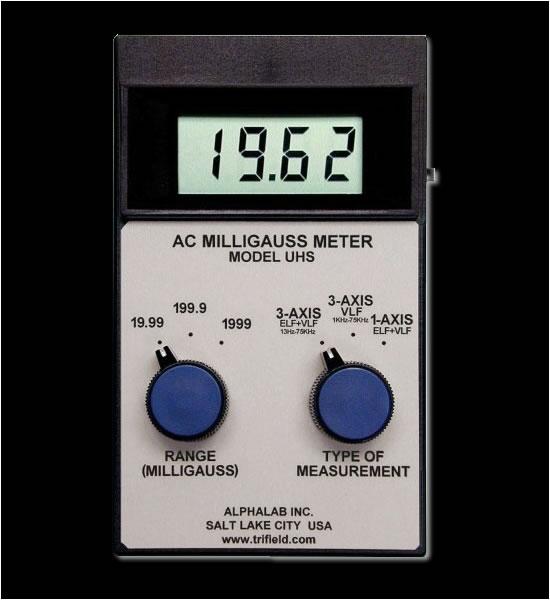
Advanced meters may measure low-frequency magnetic fields, electric fields, and radio-frequency signals in separate modes. This separation can help reveal whether a trigger came from building power or a nearby transmitter. Do not assume every multi-function device measures every band simultaneously—confirm the operating mode and published frequency range.
Seven Features to Look for in a Ghost Hunting EMF Meter
- Stated frequency range: The manufacturer should identify what the meter can actually detect. A device intended for low-frequency magnetic fields is not automatically an RF meter.
- Tri-axis sensing: Three-axis measurement reduces orientation error during mobile surveys.
- Fast, stable response: The display should react quickly without jumping so wildly that repeatable readings become impossible.
- Numerical display and clear units: Exact values are more useful for field notes than lights alone.
- Peak-hold or min/max memory: This preserves a brief high reading long enough to document it.
- Audible alert with mute control: Sound is helpful during monitoring, but a mute option prevents contamination of EVP recordings.
- Data logging: Timestamped records make it easier to compare EMF changes with video, audio, team movement, and environmental conditions.
For a broader overview of how these tools work together, read how to use EMF meters, EVP recorders, and infrared cameras.
How to Use an EMF Meter for Ghost Hunting
1. Inspect the Location Before the Session
Obtain permission, identify physical hazards, and note breaker panels, outlets, wiring paths, HVAC equipment, appliances, security systems, routers, and nearby power lines. Never enter an unsafe or unauthorized property.
2. Standardize Your Meter
Use fresh batteries. Record the meter model, mode, units, frequency setting, alarm threshold, and time. If the manual calls for zeroing or calibration, complete it before the baseline sweep and away from obvious interference.
3. Establish a Baseline Map
Walk the same route at a steady pace and hold the meter at a consistent height and orientation. Record ordinary high-reading areas rather than ignoring them. Repeat the sweep so you can see which readings are stable and which change.
4. Control Other Electronics
Keep phones, radios, cameras, battery packs, flashlights with electronic controls, and wireless microphones away from the meter. Where practical, place phones in airplane mode. Log when another device transmits, powers on, or moves near the sensor.
5. Investigate Every Spike
Stop, state the time aloud, and hold your position. Repeat the measurement from the same point, then approach from another direction. Check walls, floors, nearby rooms, and electronics. Ask teammates to remain still so human movement does not confuse the result.
6. Corroborate and Preserve the Record
Pair the meter with a stationary camera, field log, and audio recorder. A coincident event is worth reviewing, but correlation still does not establish a paranormal cause. The goal is to preserve enough context for another person to test your interpretation. See how ghost hunters use EVP recorders for a cleaner audio workflow.
Common Causes of False or Misleading EMF Readings
- Hidden wiring: Cables may run behind walls, below floors, or above ceilings.
- Motors and transformers: Refrigerators, furnaces, fans, pumps, fluorescent-light ballasts, and power supplies can cycle on and off.
- Phones and radios: Wireless devices may transmit intermittently even when no one is actively using them.
- Changing distance: Moving only a few inches toward a source can change the displayed value.
- Meter orientation: Single-axis sensors can read differently when rotated.
- Low batteries or startup behavior: Unstable power and incomplete warm-up may produce erratic results.
- Alarm contamination: An EMF meter’s beeper can be captured by an audio recorder and later mistaken for an unexplained sound.
- Confirmation bias: A dramatic moment can make a random fluctuation seem more meaningful than identical changes observed during the baseline.
A REM pod measures disruption of its own radiated field rather than functioning exactly like a standard ambient EMF meter. Both can provide data, but neither identifies what caused a trigger without additional context.
How to Maintain and Test Your EMF Reader
Store the meter in a protective case, remove batteries before long-term storage, and keep it away from strong magnets and extreme temperatures. Before each investigation, test it near a known electrical source to confirm that the display and alarm respond. This is a function check, not a substitute for laboratory calibration.
If you need traceable measurements, follow the manufacturer’s calibration interval and use an accredited calibration service appropriate for the instrument. Consumer paranormal meters are usually best treated as comparative field tools unless their specifications and calibration documentation support more exact claims.

Final Verdict
The best EMF reader for ghost hunting in 2026 is a dependable meter you understand well enough to test, baseline, and question. A tri-axis digital meter is the strongest all-around choice for most investigators. A simple LED detector can be a practical beginner tool, while a multi-mode meter with logging is better for technical investigations.
Whichever type you choose, treat every spike as the beginning of an investigation—not the end of one. Document the reading, repeat it, search for ordinary sources, and compare it with independent audio, video, and environmental records. If visual documentation is your next upgrade, compare thermal imaging and night vision before choosing a camera.
Compare EMF Meters for Your Next Investigation
Use the feature checklist in this guide to compare beginner-friendly LED detectors, tri-axis meters, and advanced field-measurement tools.
Browse EMF Meters at HauntGears
Affiliate disclosure: HauntGears may earn a commission from qualifying purchases made through links on the site, at no additional cost to you.
Frequently Asked Questions
Can an EMF meter detect ghosts?
An EMF meter detects electromagnetic fields. Paranormal investigators may use unexplained changes as leads for further investigation, but a meter cannot identify a ghost or prove that paranormal activity caused a reading.
Is a tri-axis EMF meter better for ghost hunting?
A tri-axis meter is usually easier to use consistently because it measures three directions at once. A single-axis meter can still be useful, but it must be rotated and swept methodically.
What is a normal EMF reading in a house?
There is no single number that describes every house or meter. Readings vary with wiring, appliances, distance, sensor orientation, bandwidth, and measurement mode. Create a room-by-room baseline with the same device and settings before interpreting a change.
What is the difference between mG and µT?
Milligauss and microtesla are units used for magnetic flux density. One microtesla equals 10 milligauss.
Can a phone cause an EMF meter to spike?
Yes. Phones and other wireless electronics can affect some meters, particularly devices with RF sensitivity. Keep electronics separated from the meter and log when they transmit or move.
Should I use an EMF meter and REM pod together?
They can provide complementary observations because a standard meter reads ambient fields while a REM pod monitors disruption of a field it generates. Use separate timestamps and controlled positions, and do not treat either device as proof by itself.
Discover more from Haunt Gears
Subscribe to get the latest posts sent to your email.


